Back to Insights
Predictive Analytics for Inventory Optimization
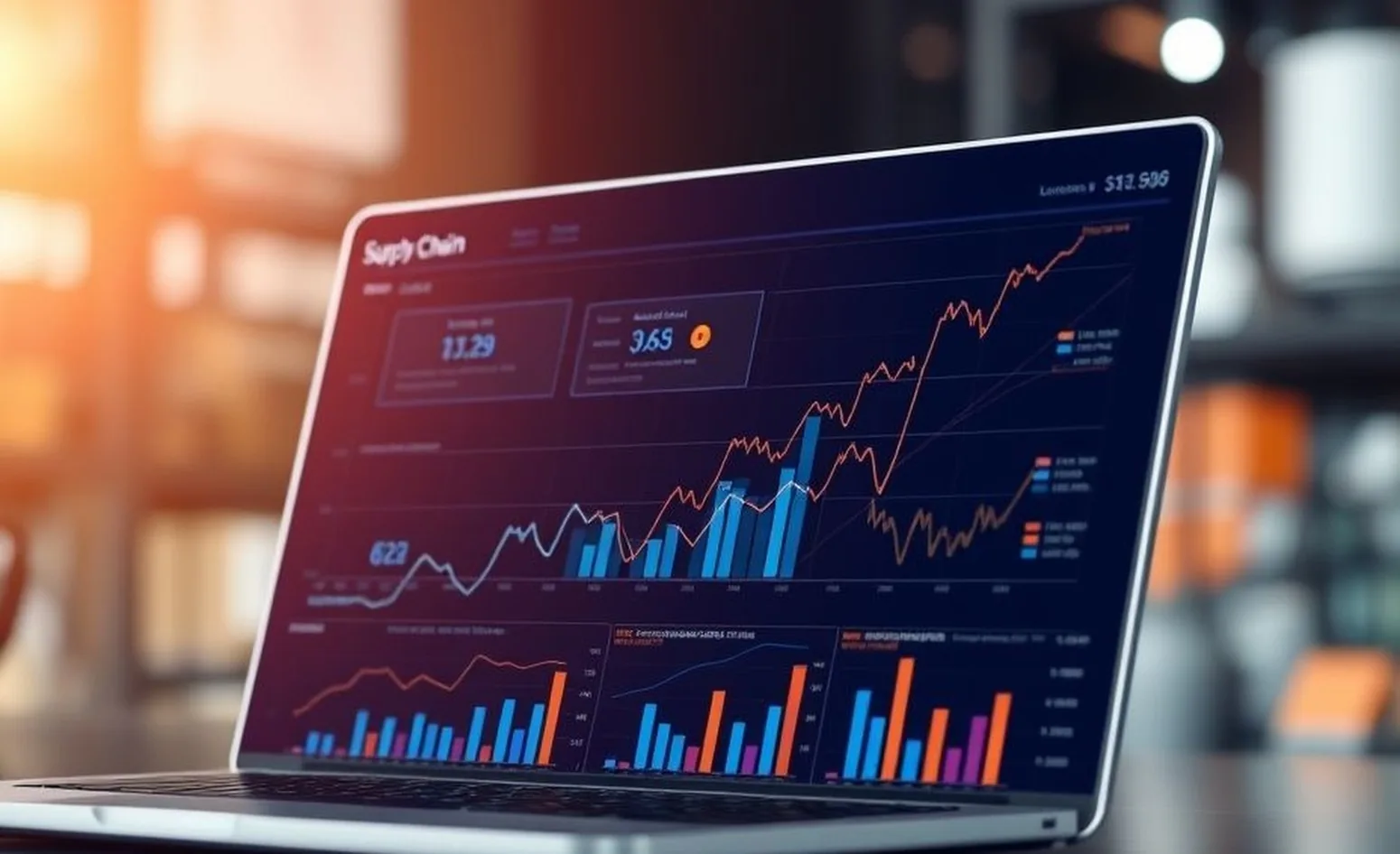
Inventory represents one of the largest capital investments for manufacturers and distributors, yet most organizations manage stock levels using rudimentary methods developed decades ago. Static reorder points, rule-of-thumb safety stocks, and gut-feel adjustments leave substantial value on the table. Predictive analytics transforms inventory management from reactive guesswork into proactive optimization, reducing carrying costs while improving service levels.
The Limitations of Traditional Inventory Methods
Conventional inventory management relies on simple calculations: average demand multiplied by lead time plus safety stock. This approach assumes stable, predictable demand patterns and fails to account for the complexity of real-world operations. Seasonal fluctuations, promotional impacts, product lifecycle stages, and market trends remain invisible to traditional formulas.
A consumer electronics distributor managed 8,500 SKUs using standard reorder point logic. Their analysis revealed that this approach led to chronic overstocking of slow-moving items while frequently running out of fast movers. Total inventory value sat at $14.2 million with 23% of SKUs accounting for 80% of capital tied up in excess stock. Meanwhile, stockout rates on A-items reached 12%, directly impacting customer satisfaction and revenue.
Data-Driven Demand Forecasting
Machine learning algorithms analyze historical patterns, seasonal trends, and external factors to generate more accurate demand predictions than traditional methods. These models continuously learn from new data, automatically adjusting forecasts as market conditions evolve. The improvement over simple moving averages typically ranges from 20-35% reduction in forecast error.
Effective predictive models incorporate multiple data streams beyond historical sales. Weather patterns affect demand for seasonal products. Economic indicators predict purchasing behavior. Competitor pricing influences market share. Social media sentiment signals emerging trends. Integrating these variables creates forecasts that anticipate change rather than simply extrapolating the past.
A building materials supplier implemented machine learning forecasting that incorporated weather data, construction permit trends, and housing starts. Their forecast accuracy improved from 68% to 87% for key product categories. This enhancement enabled a 28% reduction in safety stock while simultaneously decreasing stockouts by 62%. The dual benefit—lower inventory investment and better availability—delivered $3.2 million in annual value.
Intelligent Safety Stock Optimization
Safety stock protects against demand variability and supply uncertainty, but determining optimal levels requires balancing competing objectives. Too much safety stock wastes capital and warehouse space. Too little risks stockouts and lost sales. Traditional fixed-percentage approaches ignore the nuanced trade-offs between products.
Dynamic safety stock algorithms calculate optimal buffer levels based on service level targets, demand variability, supply lead time reliability, and product profitability. High-margin items with volatile demand warrant larger buffers, while commodity products with stable patterns require minimal protection. This differentiated approach right-sizes inventory across the portfolio.
Consider demand variability: an item with coefficient of variation (standard deviation divided by mean) of 0.3 requires significantly less safety stock than one with 1.2, assuming equivalent service targets. Lead time reliability matters equally—suppliers consistently delivering on schedule need less buffer than those with unpredictable performance. Sophisticated models incorporate both factors plus dozens of additional variables to optimize each SKU independently.
Service Level Differentiation
Not every product deserves the same service level. Strategic items serving key customers or generating high margins justify 99% availability targets. Slow-moving, low-margin commodities might operate efficiently at 90% service levels. ABC analysis combined with criticality assessment creates inventory policies matching business priorities rather than treating all SKUs identically.
An industrial distributor segmented their 12,000 SKU portfolio into nine categories based on sales velocity and customer criticality. They allocated safety stock achieving 98% service on top-tier items while accepting 92% on low-value products. This strategic differentiation reduced total inventory by $2.8 million while maintaining overall customer satisfaction scores.
ERP Integration and Real-Time Optimization
Predictive analytics delivers maximum value when integrated directly into enterprise resource planning systems. Rather than generating offline recommendations that require manual implementation, integrated solutions automatically adjust reorder points, safety stocks, and purchase quantities based on current conditions.
Modern ERP platforms offer APIs enabling advanced analytics tools to read transactional data and write back optimized parameters. This integration ensures inventory policies remain current without requiring constant manual intervention. A pharmaceutical distributor integrated predictive models with their ERP, enabling daily recalculation of 15,000 reorder points based on latest demand signals and supplier performance.
Real-time data streams enhance optimization beyond daily batch updates. Point-of-sale information, production schedules, shipment tracking, and supplier capacity all feed predictive models that continuously refine inventory decisions. The shift from periodic planning to continuous optimization captures opportunities that static approaches miss.
Implementation Roadmap
Start with data infrastructure. Predictive analytics requires clean, accessible historical data spanning 18-24 months minimum. Sales transactions, purchase orders, inventory receipts, and demand history form the foundation. Many organizations discover their data quality issues only when attempting advanced analytics—addressing these problems delivers value beyond inventory optimization.
Begin pilot programs on manageable subsets rather than attempting enterprise-wide deployment. Select 200-500 SKUs representing diverse demand patterns and business importance. Implement predictive forecasting and optimization for this test group while maintaining existing methods for other products. Measure results rigorously: forecast accuracy, inventory levels, service rates, and financial impact.
A food distributor piloted predictive inventory on their 300 highest-volume SKUs over six months. Forecast accuracy improved 31%, average inventory declined 22%, and stockouts decreased from 8.7% to 2.4%. These results justified broader deployment and demonstrated the methodology's effectiveness to skeptical stakeholders. Successful pilots build organizational confidence for larger investments.
Real-World Results
Organizations implementing predictive inventory analytics typically achieve 25-40% reductions in working capital while maintaining or improving service levels. These gains stem from multiple sources: better demand forecasts reduce safety stock requirements, optimized reorder points prevent excess buildup, and automated replenishment eliminates manual errors.
An automotive parts distributor reduced inventory from $38 million to $26 million over 18 months following predictive analytics implementation. Their 32% inventory reduction freed $12 million in working capital while fill rates improved from 92% to 96%. The carrying cost savings alone exceeded $800,000 annually, providing attractive ROI on the $450,000 technology investment.
Beyond financial metrics, organizations report operational benefits including reduced expediting costs, fewer emergency orders, improved warehouse utilization, and enhanced planning visibility. Planners shift from firefighting stockouts to strategic analysis. Buyers negotiate better terms with advanced visibility into requirements. Customer service improves through reliable availability.
Common Implementation Challenges
Data quality issues represent the most frequent obstacle. Missing transactions, incorrect unit of measure conversions, and duplicate records corrupt model inputs and undermine results. Budget sufficient time for data cleansing before expecting accurate predictions. Consider this foundational work an investment with applications extending beyond inventory management.
Organizational resistance emerges when analytics-driven recommendations contradict experienced planners' intuition. Change management requires demonstrating model accuracy through pilot results and involving planning teams in system development. The goal is augmenting human judgment with analytical insights, not replacing expertise with black-box algorithms.
Supplier collaboration challenges arise when optimized ordering patterns differ from traditional purchasing cycles. Monthly orders might shift to weekly replenishment as analytics identify opportunities for inventory reduction. Proactive supplier communication and system capability assessment prevent implementation barriers.
The Future of Intelligent Inventory
Predictive analytics continues evolving with advances in machine learning, computing power, and data availability. Next-generation systems will incorporate real-time market signals, automatically adjust to disruptions, and optimize across multi-echelon supply networks simultaneously. The competitive advantage will increasingly favor organizations leveraging these capabilities over those relying on traditional methods.
The question isn't whether to adopt predictive inventory analytics but rather how quickly to implement. The technology has matured beyond experimental status into proven methodology delivering consistent results. Organizations delaying adoption concede competitive advantage to rivals already capturing substantial savings from data-driven inventory optimization.