Back to Insights
Lean Manufacturing Beyond the Factory Floor
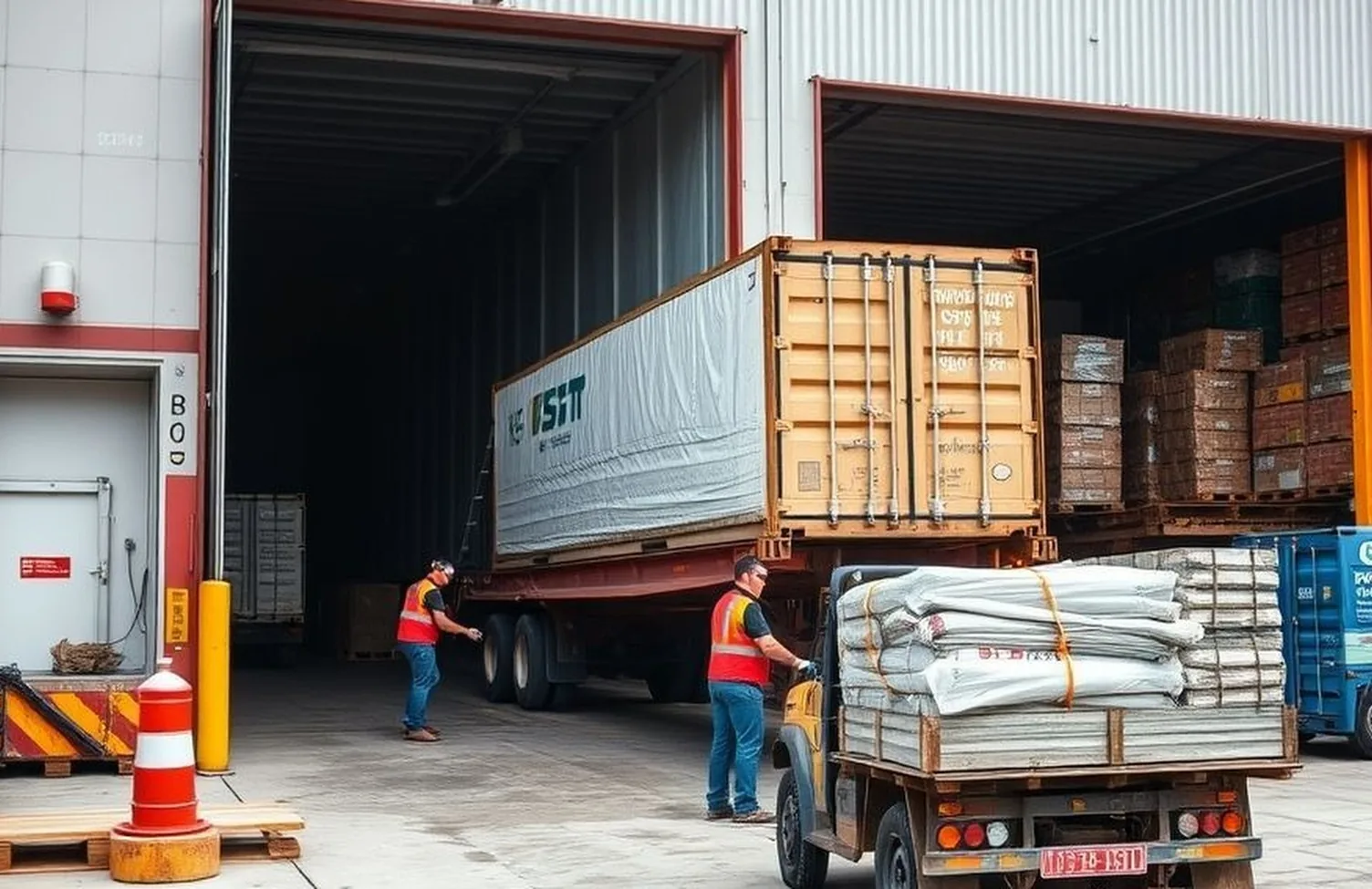
Lean manufacturing principles transformed production operations by eliminating waste and maximizing value creation. Yet the same methodology that revolutionized factory floors often stops at the production department door. Office operations, customer service teams, and administrative functions continue operating with inefficiencies that would never be tolerated in manufacturing environments.
The opportunity cost is substantial. Administrative processes typically consume 25-35% of operating expenses in manufacturing companies, yet receive minimal continuous improvement attention. When organizations extend Lean thinking beyond production, they unlock efficiency gains that compound throughout the business.
Identifying Office Waste
Traditional Lean manufacturing identifies seven forms of waste: overproduction, waiting, transportation, over-processing, inventory, motion, and defects. These categories translate directly to office environments, though they manifest differently than on production lines.
Waiting time in offices appears as approval delays, information requests, meeting scheduling, and system access issues. One financial services company discovered their expense reimbursement process included 6.2 days of waiting time across four approval stages—compared to just 18 minutes of actual processing work. By implementing parallel approvals and raising authorization thresholds, they reduced cycle time to 1.3 days.
Over-processing occurs when administrative tasks require excessive steps, redundant data entry, or unnecessary documentation. Invoice processing provides a common example: organizations often require multiple reviews and data re-entries across purchasing, receiving, accounts payable, and general ledger systems despite modern technology enabling single-entry automation.
Motion waste includes the physical and digital movement required to complete work. Employees searching through email chains, navigating multiple software systems, or walking to distant printers represent pure waste. Process mapping often reveals that knowledge workers spend 30-40% of their time searching for information rather than applying expertise.
Adapting Lean Tools for Administrative Work
Core Lean tools require modification for office application, but their fundamental logic remains valid. Value stream mapping works exceptionally well for transactional processes like order entry, customer onboarding, or contract approval. Rather than tracking material flow, office value streams follow information and decisions through various touchpoints.
A healthcare equipment manufacturer applied value stream mapping to their quote-to-order process. The exercise revealed that a customer request touched 11 different people across five departments before generating a purchase order. The actual work required 2.4 hours, but calendar time averaged 8.3 days due to handoffs and waiting. Process redesign consolidated ownership, implemented templates for standard configurations, and reduced cycle time to 1.5 days while improving quote accuracy.
Visual Management in Knowledge Work
Manufacturing environments use visual controls—kanban boards, andon lights, performance displays—to make problems immediately visible. Office settings benefit equally from visual management, though applications differ from production floors.
Customer service teams effectively use visual boards displaying inquiry volumes, aging, and resolution status. Rather than queries disappearing into individual email inboxes, team boards create transparency about workload distribution and enable collaborative problem-solving when backlogs develop.
Finance departments deploy visual management for close calendars, showing task completion status and highlighting items at risk of missing deadlines. This simple visibility often reduces month-end cycle time by 20-30% by enabling early intervention on delayed activities.
Standard Work for Repeatable Processes
Standard work documentation captures the current best method for completing tasks, providing both training tools and continuous improvement baselines. While manufacturing standard work specifies precise motions and cycle times, office standard work focuses on decision logic, information sources, and quality checks.
A distribution company documented standard work for their order entry process, which had evolved into eight different approaches across their team. Analysis identified that the most efficient method required 40% less time than the slowest approach while generating fewer errors. Standardizing on the best practice and training all team members improved overall productivity by 24%.
Standard work proves particularly valuable for infrequent but important tasks. Month-end close procedures, annual planning cycles, and regulatory reporting benefit from documentation that prevents knowledge loss when personnel change and reduces the cognitive load of remembering rarely-performed steps.
Kaizen Culture in Administrative Functions
Continuous improvement—kaizen in Japanese—represents the philosophical foundation of Lean thinking. Manufacturing kaizen events bring together cross-functional teams to rapidly improve specific processes. The same approach works effectively for administrative improvement.
Office kaizen events typically focus on processes causing visible frustration: expense reporting, meeting scheduling, document approval, or information requests. A three-day kaizen event addressing these issues generates immediate improvements while building problem-solving capability within the team.
One technology company ran quarterly kaizen events targeting administrative processes nominated by employees. Over two years, they completed 23 improvement projects that collectively saved an estimated 4,200 employee hours annually. Beyond quantifiable savings, the events shifted organizational culture toward identifying and solving problems rather than accepting frustration as inevitable.
Optimizing Customer Service Workflows
Customer service operations represent a particularly high-value target for Lean application. These functions directly impact customer satisfaction while often suffering from inefficient processes developed incrementally without systematic design.
First-contact resolution rates improve dramatically when Lean tools identify root causes of escalations and repeat contacts. Value stream analysis typically reveals that customer service representatives lack access to information or authorization necessary to resolve common issues. Providing appropriate tools and empowerment often increases first-contact resolution from 60-70% to 85-90%, significantly improving both customer satisfaction and operational efficiency.
A telecommunications company applied Lean methodology to their technical support operation. Process mapping revealed that 40% of calls required transfers due to inadequate initial information gathering rather than complexity requiring specialized expertise. Implementing a structured diagnostic script and expanding tier-one authority reduced transfers by 62% while decreasing average handle time.
Eliminating Administrative Bottlenecks
Executive approvals frequently create process bottlenecks in administrative workflows. Well-intentioned control measures often generate delays far exceeding any risk mitigation value. Lean thinking challenges these controls through data-driven analysis of actual risk versus process cost.
A manufacturing company required VP approval for all purchase orders exceeding $5,000—a threshold unchanged for 15 years despite inflation. Analysis showed executives spent 12 hours monthly reviewing routine purchases, with zero instances of rejections in the past year. Raising the threshold to $25,000 and implementing post-purchase audit sampling eliminated the bottleneck while maintaining financial control.
Technology as an Enabler, Not Solution
Organizations sometimes mistake technology implementation for process improvement. Software purchases without underlying process optimization typically automate existing inefficiency rather than eliminating waste. Lean methodology emphasizes simplifying processes before automation.
Effective technology deployment follows Lean improvement. After mapping workflows, eliminating waste, and standardizing approaches, organizations can identify where technology delivers genuine value. This sequence produces far better results than starting with software selection and forcing processes to conform to system capabilities.
Measuring Administrative Efficiency
Manufacturing operations measure efficiency through cycle time, throughput, and quality metrics. Administrative functions require similar measurement rigor. Relevant metrics include process cycle time, steps in workflow, error rates, and customer satisfaction for service functions.
The key lies in making performance visible and actionable. Teams that review metrics weekly and discuss improvement opportunities consistently outperform those treating measurement as reporting obligation. Lean thinking views metrics as conversation starters rather than scorecard entries.
Sustaining Improvement Beyond Initial Gains
Initial Lean implementations often generate dramatic improvements, but sustaining momentum requires building continuous improvement into daily operations. This includes regular process reviews, employee suggestion systems, and leadership commitment to improvement over firefighting.
Organizations that successfully extend Lean beyond manufacturing create improvement expectations across all functions. Administrative employees become as focused on eliminating waste and increasing value as their production counterparts. This cultural transformation—more than any specific tool or technique—determines whether Lean thinking truly transforms organizational performance.